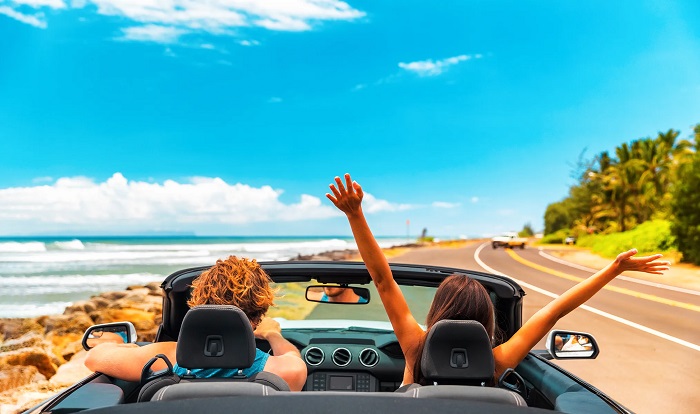
Driving around Mallorca by rental car gives you something organized tours rarely offer: control over your day. You can leave Palma early, stop at a quiet beach, and enjoy lunch in a mountain village. Better still, you won’t spend your holiday watching bus schedules.
Before collecting your keys, compare rental conditions carefully. We recommend RosCar Mallorca for comparing offers from international and local car rental companies. The platform includes options without a deposit or credit card, plus insurance and full coverage choices. Check the conditions of your selected vehicle before booking.
Mallorca has excellent main roads, but some coastal routes demand extra attention. Narrow village streets, steep bends, and busy beach parking areas can surprise first-time visitors. These practical tips will help you avoid unnecessary costs and enjoy a more relaxed road trip.
1. Why Renting a Car in Mallorca Makes Sense
Mallorca covers roughly 3,640 square kilometers. Although the island looks compact, its most interesting places are spread across different regions. Public buses connect major towns, but smaller beaches may require several transfers.
A rental car makes these journeys considerably easier. For example, you can explore Valldemossa in the morning and continue to Deià for lunch. Later, drive towards Sóller or stop at a viewpoint overlooking the Mediterranean.
We recommend renting a car when your itinerary includes several destinations outside Palma. However, visitors staying exclusively in the capital may find walking and public transport more convenient.
5 Powerful Advantages of Having Your Own Vehicle
- Visit remote beaches without relying on limited bus routes.
- Explore traditional villages at your preferred pace.
- Carry beach equipment, luggage, and shopping comfortably.
- Plan sunrise trips before popular destinations become crowded.
- Change your itinerary whenever the weather improves elsewhere.
There’s another advantage worth mentioning. You can book accommodation outside busy resort centers and still reach popular attractions easily.
2. Choose the Right Rental Car Before Your Trip
Don’t automatically choose the cheapest vehicle. A low daily rate doesn’t always mean the lowest total cost. Insurance exclusions, mileage limits, and additional charges can quickly change the calculation.
For most couples, a compact car offers an excellent balance between comfort and convenience. Small vehicles are particularly useful in mountain villages, where streets can become surprisingly narrow.
Families traveling with children may prefer a larger hatchback or SUV. Meanwhile, groups with considerable luggage should check boot capacity before reserving a vehicle.
Which Car Type Works Best?
| Vehicle Type | Recommended For | Main Advantage |
|---|---|---|
| Economy | Couples and solo travelers | Easy parking and low fuel consumption |
| Compact | Small families | Comfortable for daily island trips |
| SUV | Families and longer journeys | Additional space and comfort |
| Convertible | Couples exploring coastal roads | Open-air driving experience |
| Minivan | Groups and larger families | More passenger and luggage space |
Renting Without a Deposit or Credit Card
Many travelers prefer not to block a large amount on their bank cards. Fortunately, selected Mallorca rental offers allow bookings without a security deposit.
You can also find vehicles that don’t require a credit card. Some providers accept debit cards or cash for the remaining rental balance.
However, payment conditions differ between suppliers. Check whether the advertised option applies to the entire rental or only the initial reservation.
Our recommendation is simple: read the payment details before entering your personal information. Pay particular attention to deposits, card requirements, insurance excess, and cancellation conditions.
3. Collecting Your Rental Car at Palma Airport
Palma de Mallorca Airport (PMI) is the main arrival point for international visitors. Collecting a rental car there allows you to begin your journey without arranging separate transport.
Nevertheless, pickup arrangements vary. Some companies operate airport desks, while others use nearby offices or shuttle services.
Important Documents to Prepare
- A valid driving licence accepted in Spain.
- A passport or another accepted identity document.
- Your booking confirmation or electronic voucher.
- An international driving permit when required.
- The payment method accepted by your rental supplier.
We recommend checking your documents several days before departure. Driving licence requirements depend on the issuing country and the driver’s circumstances.
Inspect the Vehicle Before Leaving
Take two minutes to inspect the car carefully. Photograph the bumpers, wheels, mirrors, windscreen, and interior.
Make sure existing damage appears on the inspection report. Also, check the fuel level and confirm the return conditions.
Finally, save the rental company’s emergency telephone number. You probably won’t need it, but having it available makes unexpected situations easier to manage.
4. Understand Mallorca’s Driving Rules
Driving in Mallorca follows Spanish traffic regulations. Vehicles travel on the right, and drivers overtake on the left.
Seat belts are mandatory, and children must use appropriate restraints according to the applicable rules. Drivers must also respect pedestrian crossings and posted speed limits.
Speed Limits You Should Know
| Road Type | General Speed Limit |
|---|---|
| Motorways and expressways | 120 km/h |
| Conventional rural roads | 90 km/h |
| Urban roads with multiple lanes per direction | 50 km/h |
| Urban roads with one lane per direction | 30 km/h |
| Shared-level pedestrian and vehicle streets | 20 km/h |
These are general limits for passenger cars. Local signs, temporary restrictions, and road conditions may require lower speeds.
For official guidance, consult the Spanish Directorate-General for Traffic.
Common Mistakes Visitors Should Avoid
- Ignoring lower speed limits in residential areas.
- Using a handheld phone while driving.
- Entering restricted streets without checking signs.
- Stopping near dangerous bends to take photographs.
- Assuming every rural road has enough space for two vehicles.
Spain has strict drink-driving rules. Our advice is to avoid alcohol completely whenever you’re responsible for the vehicle.
5. Driving Through the Serra de Tramuntana Mountains
The Serra de Tramuntana offers some of Mallorca’s most memorable driving scenery. Expect limestone mountains, stone villages, and impressive coastal viewpoints.
However, the roads require patience. Sharp corners, cyclists, and occasional buses can make even short journeys surprisingly slow.
Exploring the Famous Sa Calobra Road
The Ma-2141 road towards Sa Calobra is famous for its dramatic hairpin bends. Its steep descent attracts drivers looking for spectacular mountain scenery.
This isn’t the ideal route for nervous drivers. Some sections have limited visibility, and larger vehicles need additional space around corners.
We recommend starting early and checking road conditions before departure. Never stop on a narrow bend for photographs.
Practical Mountain Driving Advice
- Choose a vehicle you’re comfortable controlling.
- Reduce speed before entering sharp bends.
- Keep a safe distance from cyclists.
- Use designated viewpoints rather than roadside shoulders.
- Allow extra time for buses and oncoming traffic.
- Avoid demanding mountain routes during severe weather.
Remember that mountain driving requires more concentration than motorway travel. Plan occasional breaks rather than rushing between attractions.
6. Parking in Palma and Popular Beach Towns
Parking deserves more attention than many visitors expect. During summer, finding a legal space near popular beaches can take longer than the drive itself.
Palma also has regulated parking areas and streets with restricted vehicle access. Never assume an empty roadside space is available for unrestricted parking.
Understanding Parking Signs and Zones
Blue-marked parking spaces often indicate regulated paid parking. Restrictions and operating hours vary by municipality.
White-marked spaces may offer free parking, provided no additional restrictions apply. Yellow markings commonly indicate parking or stopping restrictions.
Always read nearby signs and payment instructions. Some locations use parking machines, while others support mobile applications.
How to Avoid Parking Problems
- Check parking options before leaving your accommodation.
- Arrive early when visiting popular beaches.
- Use designated public car parks whenever possible.
- Keep valuables out of sight.
- Read signs before leaving the vehicle.
- Save the parking location on your phone.
For central Palma, using an underground car park can save considerable time. It may cost more, but it removes much of the uncertainty.
7. Plan the Best Mallorca Road Trip Routes
Driving around Mallorca by rental car becomes much easier with a realistic itinerary. Don’t try to visit every famous beach and village in a single day.
Instead, organize destinations by region. This reduces unnecessary driving and gives you more time to enjoy each stop.
Route 1: Palma, Valldemossa and Deià
Begin in Palma and travel towards Valldemossa. Explore its stone streets, cafés, and historic surroundings.
Continue towards Deià, one of the island’s best-known mountain villages. The coastal road offers beautiful scenery, but parking may be limited.
Allow at least half a day for this trip. A full day is better if you want a relaxed lunch and additional viewpoints.
Route 2: Sóller and Port de Sóller
Sóller is a popular destination for visitors interested in traditional architecture and mountain scenery. Nearby Port de Sóller offers a waterfront promenade and restaurants.
You can visit both places during one outing. However, allow time for parking and exploring on foot.
Route 3: Alcúdia and Northern Mallorca
Northern Mallorca works particularly well for family road trips. Alcúdia combines historic streets with access to long sandy beaches.
Nearby coastal destinations provide opportunities for swimming, sightseeing, and relaxed meals.
We recommend checking beach parking before departure, particularly during July and August.
Route 4: Santanyí and the Southeast Coast
Southeastern Mallorca attracts visitors with small coves and clear Mediterranean water. Santanyí makes a useful starting point for exploring this region.
Plan your beach visits carefully. Some coastal car parks fill early, and certain coves require a walk from designated parking areas.
8. Fuel, Navigation and Road Conditions
Mallorca has an established network of petrol stations. However, opening hours vary, particularly in smaller communities.
Before entering remote mountain areas, check your fuel level. You don’t want to spend your holiday searching for an open petrol station.
Useful Navigation Tips
- Download offline maps before your journey.
- Check whether your route includes narrow mountain roads.
- Confirm the exact entrance to your accommodation.
- Allow extra time during summer traffic.
- Follow official road signs when navigation instructions conflict.
Google Maps can help estimate journey times, but it cannot guarantee easy parking. In busy areas, add another 20 to 30 minutes to your schedule as a planning allowance.
Manual or Automatic Transmission?
Manual cars are common in Spanish rental fleets. Automatic vehicles are also available, although selection and pricing vary.
If you’re unfamiliar with manual transmission, reserve an automatic car in advance. This can make mountain driving significantly more comfortable.
9. Rental Insurance and Full Coverage Explained
Insurance deserves careful attention when booking a vehicle. Basic rental prices may include certain protections, but the remaining financial responsibility can differ considerably.
For example, collision damage protection may include an excess. This means the customer could remain responsible for part of the cost after covered damage.
Common Insurance Options
- Collision Damage Waiver (CDW): limits financial responsibility for certain vehicle damage, subject to the agreement.
- Theft Protection (TP): provides specified protection if the rental vehicle is stolen.
- Full Coverage: may reduce financial exposure for covered incidents, depending on exclusions and reimbursement conditions.
We recommend reading the insurance terms rather than relying only on the product name. Check exclusions involving tyres, glass, keys, underbody damage, and administrative fees.
Also, determine whether coverage reduces your liability directly or reimburses eligible expenses afterward. These arrangements aren’t always the same.
10. How to Save Money on Mallorca Car Rental
There are several ways to control rental costs without sacrificing convenience. The first is straightforward: compare the total price rather than only the daily rate.
Summer demand can increase prices and reduce vehicle availability. Booking earlier often gives travelers a wider selection, although savings aren’t guaranteed.
7 Smart Money-Saving Tips
- Compare offers from international and local suppliers.
- Check options with no deposit or credit card requirement.
- Consider economy cars when passenger space allows.
- Review fuel policies before booking.
- Choose insurance based on actual coverage needs.
- Check mileage allowances and additional driver fees.
- Compare cancellation conditions before paying.
Don’t forget pickup and return times. An unnecessary extra rental day can increase the total price.
For shorter holidays, collecting the vehicle only when needed may also save money. However, compare this approach against transfer and transport costs.
11. Traveling Around Mallorca With Children
Families benefit from the flexibility of a rental car. Beach towels, snacks, strollers, and spare clothes are easier to carry in your own vehicle.
Nevertheless, family travel requires a little more preparation. Child restraint rules apply, and the correct seat must suit the child’s size.
Family Road Trip Checklist
- Reserve suitable child seats before arrival.
- Check luggage space carefully.
- Carry drinking water during summer.
- Plan breaks on longer journeys.
- Avoid leaving children inside parked vehicles.
We recommend selecting two main destinations per day when traveling with younger children. This usually creates a more manageable schedule.
12. When Is the Best Time for Driving Around Mallorca?
Spring and autumn generally offer pleasant conditions for road trips. Temperatures are often more comfortable than during peak summer.
Summer remains attractive for beach holidays. However, popular coastal destinations can become crowded, especially during July and August.
Winter offers a quieter atmosphere in many areas. Still, mountain weather can change quickly, and certain tourism services operate seasonally.
Seasonal Travel Comparison
| Season | Driving Experience | Recommended Activities |
|---|---|---|
| Spring | Generally comfortable conditions | Village visits and scenic drives |
| Summer | Busy roads near popular beaches | Early beach trips and coastal sightseeing |
| Autumn | Often suitable for relaxed exploration | Mountain villages and coastal routes |
| Winter | Quieter tourist areas, variable weather | Palma, countryside and shorter road trips |
Whatever the season, check the weather forecast before driving into the mountains.
13. Frequently Asked Questions About Mallorca Car Rental
Is driving around Mallorca difficult for tourists?
Most main roads are straightforward for experienced drivers. However, mountain routes and narrow village streets require additional care. Choose a smaller car if you’re concerned about limited road space.
Can I rent a car in Mallorca without a deposit?
Yes. Selected rental companies offer vehicles without a security deposit. Availability depends on the supplier, dates, and selected conditions. Always confirm the payment requirements before booking.
Can I rent a car without a credit card?
Yes. Some rental offers accept debit cards or other approved payment methods. However, not every supplier provides this option. Check the collection requirements and the permitted payment methods.
Do I need full insurance for a rental car?
Full coverage isn’t universally mandatory. However, additional protection may reduce certain financial risks. Compare the excess, exclusions, and claim procedures before choosing insurance.
How many days do I need to explore Mallorca by car?
Three or four days allow visits to several major regions. Five to seven days offer a more relaxed schedule with additional beaches, mountain villages, and countryside stops.
Is parking free in Mallorca?
Free parking exists in many areas, but availability depends on local regulations. Central Palma and popular tourist destinations often have paid or restricted parking. Always check signs before leaving your vehicle.
Can I collect a rental car at Palma Airport?
Yes. Many suppliers provide airport pickup arrangements. These may include terminal desks, nearby rental offices, or shuttle transfers. Check the exact collection instructions in your booking confirmation.
Is Mallorca suitable for a family road trip?
Yes. Mallorca offers beaches, historic towns, mountain scenery, and family-friendly attractions. A rental car makes traveling between these destinations more convenient, especially with children and luggage.