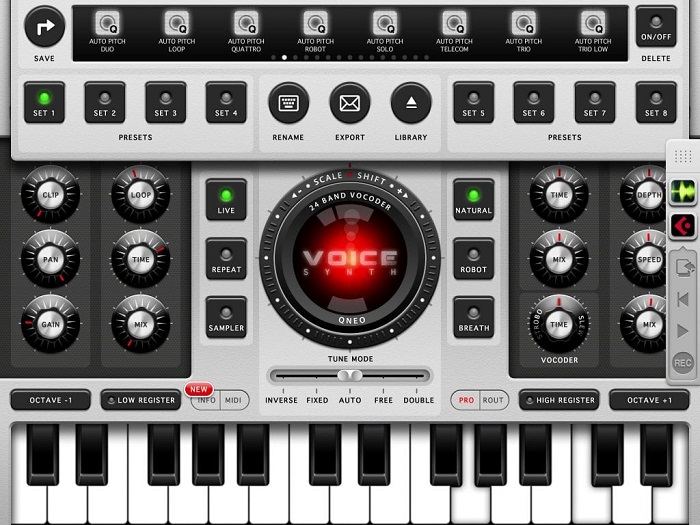
There was a time when losing your voice meant silence. Now, that’s no longer true. Thanks to technology like the voice synthesizer, people can speak—sometimes even in their own tone—even when they physically can’t. And it’s not just about accessibility. Voice synthesizers are quietly showing up in more places than you might imagine.
When I first came across one, I thought it was something futuristic or complicated. But the more I learned, the more I realized how common and useful they’re becoming. Whether you’re navigating a smart assistant, listening to a story, or watching a dubbed video, chances are, you’ve heard a synthetic voice—and maybe didn’t even notice.
It’s Not All Robots and Monotone Voices
You know that flat, emotionless voice we all associate with old-school machines? That’s not today’s reality. Modern voice synthesizers are much more human-like now. They can express tone, feeling, and even subtle pauses that sound real.
This shift didn’t happen overnight. Behind the scenes, developers worked hard to teach machines how to “talk” the way people do. They’ve trained systems to understand not just words, but how those words are meant to be said. And while some voices are clearly digital, others are so close to human that it’s easy to forget they’re not.
The cool part? It’s not limited to English or any one language. Voice synthesizers can be multilingual, expressive, and even customized to sound like specific people—with permission, of course.
Everyday Places You’ve Probably Heard One
If you’ve ever asked your phone for directions or played around with text-to-speech features, you’ve already used a voice synthesizer without even thinking about it. They’re also helping kids with learning challenges follow along in class, giving people with ALS or other conditions a way to keep expressing themselves, and supporting creators who want to make content without recording everything from scratch.
The technology might feel invisible, but its impact is huge. It’s the kind of tool that shows up behind the scenes and quietly makes life easier or more inclusive without a lot of noise.
The Ethics and Emotions Behind It All
There’s something personal about voice. It carries more than words—it carries identity. So, when we start using synthesized voices, especially those modeled after real people, it brings up questions. Who owns a voice? Should someone be able to sell or license it?
Those are important things to think about. But it’s also true that many people find deep comfort in using a digital voice that feels like theirs. For someone who’s lost the ability to speak, having that option can be powerful.
So the voice synthesizer isn’t just about convenience—it’s also about dignity, expression, and connection. When used thoughtfully, it opens doors that might have otherwise stayed shut.
What Comes Next
The future of this tech looks bright. As voices keep getting more natural, we might not even notice when we’re listening to a synthetic one. And maybe that’s the point—it blends in, enhances communication, and supports creativity without standing out as something artificial.
Whether it’s helping someone get through the day, assisting a busy content creator, or simply making digital tools feel a little more personal, the voice synthesizer is here to stay. And in a world that’s always talking, that might be one of the quietest revolutions we’re witnessing.